Health
Government to Introduce AI-Enabled Digital Learning for Students at 57 Government Medical Colleges
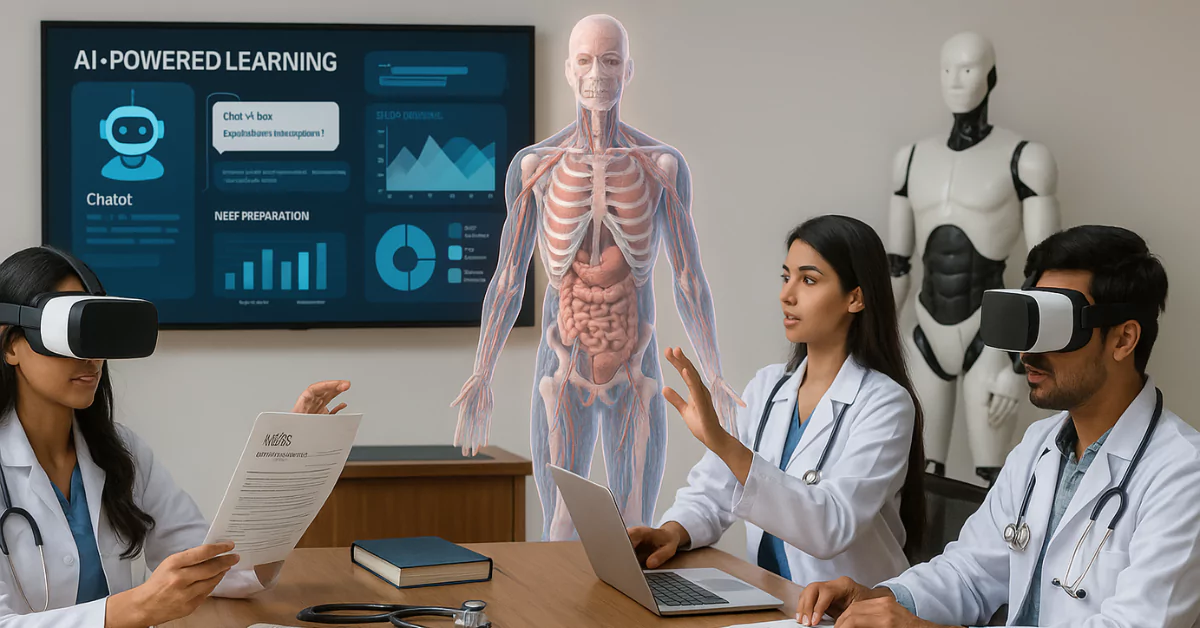
In a significant push toward modernizing medical education, the Indian government has announced plans to provide AI-enabled learning resources and digital e-book access to students across 57 government medical colleges. The initiative is particularly focused on institutions located in remote and underserved regions, where access to quality academic resources has traditionally been limited.
The move aims to bridge the educational gap between urban and rural medical institutions by leveraging advanced technologies such as Artificial Intelligence (AI). By integrating AI-driven platforms into the curriculum, students will gain access to personalized learning tools, smart content recommendations, adaptive assessments, and real-time academic support. This digital transformation is expected to enhance conceptual clarity, clinical understanding, and exam preparation for future medical professionals.
Under the initiative, students will receive access to an extensive digital library that includes updated medical textbooks, reference materials, research journals, and interactive multimedia content. These resources will be made available through secure online portals, enabling students to study anytime and anywhere. For colleges in geographically challenging areas, this digital access could prove transformative.
The program is likely to be implemented under the guidance of the Ministry of Health and Family Welfare in collaboration with the National Medical Commission. Officials believe that integrating AI into medical education aligns with India’s broader digital transformation goals and the push toward technology-driven governance.
Artificial Intelligence in medical education can support case-based simulations, diagnostic training modules, and AI-powered doubt-solving systems. Students may also benefit from virtual labs, 3D anatomical models, and interactive patient case studies that enhance practical understanding without the constraints of physical infrastructure.
This initiative is especially important as India continues to expand its medical education capacity. Over the past few years, the government has increased the number of medical seats and established new colleges across various states. However, infrastructure and resource disparities remain a concern. By providing AI-based digital learning tools, authorities aim to ensure uniform quality standards across all institutions.
Experts believe that such a move could significantly improve academic performance and reduce the knowledge gap between top-tier institutions and newer colleges. Access to updated research materials and AI-driven analysis tools will also help students stay aligned with global medical advancements.
Additionally, the program supports the broader Digital India vision by promoting technology adoption in higher education. If successfully implemented, it may serve as a model for other professional courses, including engineering, nursing, and allied health sciences.
The introduction of AI-enabled digital learning resources in 57 government medical colleges marks a progressive step toward inclusive and technology-driven education reform. By empowering students in remote regions with modern tools and comprehensive e-book access, the government is working to build a stronger, more equitable medical education ecosystem for the future.
Note: Content and images are for informational use only. For any concerns, contact us at info@rajasthaninews.com.
Previous Post

Next Post
40 के बाद शर्ट से बा...
Related Post