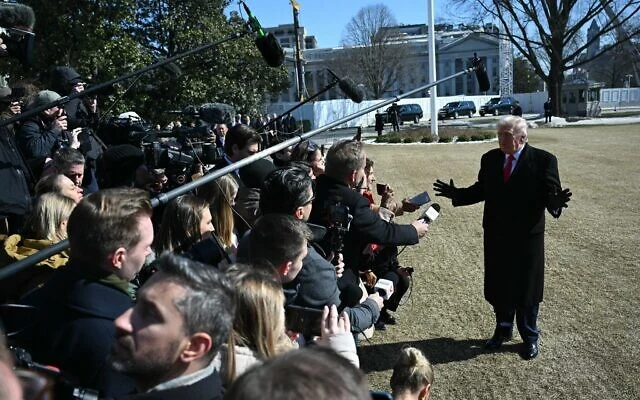
Tensions between the United States and Iran have intensified following remarks by President Donald Trump suggesting that a change in power in Tehran “would be the best thing that could happen.” The statement has added a new political dimension to an already volatile geopolitical situation in the Middle East.
Trump’s comments come amid growing reports that Washington is preparing for extended military operations in the region. In a significant show of force, the US is deploying a second aircraft carrier, the USS Gerald R. Ford, to the Middle East. The move signals heightened readiness and underscores the seriousness with which American officials are viewing the evolving security landscape.
The USS Gerald R. Ford, one of the most advanced aircraft carriers in the US Navy, brings enhanced strike capabilities, advanced radar systems, and a larger air wing capacity. Its deployment alongside existing US naval assets substantially increases American operational flexibility and deterrence power in the region. Military analysts interpret this as both a defensive precaution and a strategic signal to Tehran.
The broader US-Iran rivalry has long been marked by disputes over nuclear policy, regional influence, sanctions, and proxy conflicts. Trump’s remarks regarding regime change are likely to provoke strong reactions within Iran and across the international community. Historically, statements suggesting political transition in sovereign nations have often intensified diplomatic friction.
Meanwhile, US defense officials have emphasized that the carrier deployment aims to protect American interests, ensure regional stability, and deter potential escalation. However, critics argue that increased military presence could further strain diplomatic efforts and heighten the risk of miscalculation.
Regional allies are closely monitoring developments. Several Middle Eastern nations rely heavily on US security guarantees, and the arrival of an additional carrier strike group may reassure some partners while alarming others. Global energy markets are also sensitive to any instability in the region, given its strategic importance to oil supply routes.
Experts note that extended operations in the Middle East require significant logistical coordination, intelligence sharing, and diplomatic engagement. While military preparedness is evident, diplomatic channels remain crucial in preventing open confrontation.
As rhetoric sharpens and military deployments expand, the coming weeks will be critical in determining whether tensions de-escalate through negotiations or intensify into a broader strategic standoff. The interplay between political statements and military positioning will shape the next phase of US-Iran relations.
For now, the deployment of the USS Gerald R. Ford and President Trump’s remarks have unmistakably elevated the stakes in an already fragile geopolitical environment.

Note: Content and images are for informational use only. For any concerns, contact us at info@rajasthaninews.com.

Previous Post

Next Post
"Peter Dutton Affirm...
Related Post