Education
Naidu’s Many Visions: ₹100-Crore Quantum Nobel Plan Sets Aspirations, Highlights Capacity Gaps

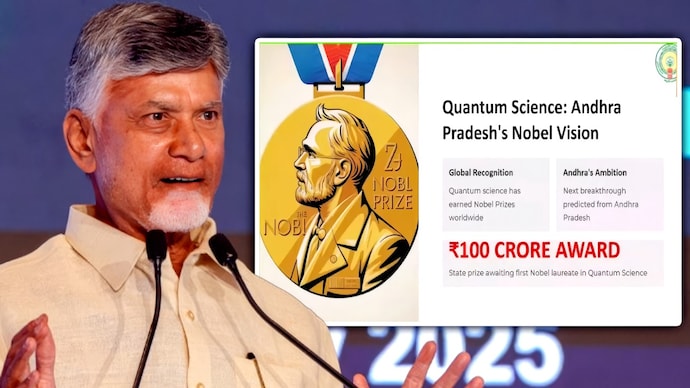
Andhra Pradesh Chief Minister N. Chandrababu Naidu’s announcement of a ₹100-crore initiative aimed at nurturing Nobel-level work in quantum science is emblematic of his larger vision for the State—one that blends ambitious educational investment with a technology-driven industrial transformation centred on Amaravati. The declaration has generated excitement in academic and policy circles, but it has also drawn attention to the structural and institutional challenges that lie beneath the aspiration.
Naidu’s proposal sits at the intersection of higher education, advanced scientific research, and economic strategy. Quantum science, a frontier field globally, promises breakthroughs across computing, communications, materials, and national security. By signalling a willingness to invest heavily in such research, the Andhra Pradesh government is positioning itself as a forward-looking player in India’s knowledge economy, aiming to move beyond traditional industries toward deep-tech leadership.
However, the scale of the ambition raises immediate questions about capacity and readiness. World-class quantum research requires more than funding announcements. It demands sustained investment in laboratories, access to cutting-edge equipment, long-term research grants, and—most critically—a strong ecosystem of scientists, mentors, and institutions capable of producing globally competitive work. At present, India’s quantum research base remains concentrated in a few elite national institutes, and Andhra Pradesh is still in the process of rebuilding and expanding its higher-education infrastructure.
The proposed initiative also highlights the challenge of talent retention and attraction. To realistically aspire for Nobel-level outcomes, Amaravati would need to draw top researchers from India and abroad, offer academic freedom, ensure stable funding cycles, and build collaborations with global universities and research centres. These are long-term commitments that extend well beyond a single budgetary allocation.
From an economic perspective, Naidu’s vision aligns with his broader plan to transform Amaravati into a technology-led growth hub. Investments in frontier science are intended not only to boost academic prestige but also to catalyse innovation-driven industries, startups, and high-value employment. In theory, a strong research ecosystem can feed directly into industrial competitiveness, particularly in areas such as semiconductors, artificial intelligence, and advanced manufacturing.
Yet the contrast between aspiration and existing infrastructure remains stark. Andhra Pradesh must simultaneously address foundational issues—such as faculty shortages, uneven research output, and limited laboratory capacity—while attempting to leapfrog into cutting-edge science. Critics argue that without a phased, ecosystem-wide approach, headline-grabbing announcements risk outpacing institutional reality.
Supporters, however, see Naidu’s move as a statement of intent rather than an immediate promise of results. They argue that transformational change often begins with bold goals that force systems to evolve. By placing quantum research and Nobel-level ambition into the public conversation, the government is signalling priorities that could shape funding, policy, and institutional reform over the next decade.
Ultimately, Naidu’s ₹100-crore Quantum Nobel vision reflects both the strength and tension of his leadership style: expansive ambition paired with complex execution challenges. Whether Amaravati can translate this vision into sustainable scientific capacity will depend on consistent policy follow-through, institutional building, and a realistic alignment between aspiration and ground-level readiness.
Note: Content and images are for informational use only. For any concerns, contact us at info@rajasthaninews.com.

Previous Post
Next Post
"हाईकोर्ट ने प्राइव...
Related Post